A guide for parents, caregivers and teachers
AI Kids Songs and Videos: How to Choose Quality Children’s Music
AI kids songs and AI-generated kids videos are now everywhere, and some of them are careless. This guide explains what parents are worried about, what YouTube and Spotify do about it, how to tell whether a song is AI-made, and a seven-point check you can use on any children’s song — made with AI or not.
The short answer
Whether a kids song was made with AI matters less than whether it was made with care. Look for words a child can understand, a story that holds together, correct facts, music that doesn’t sound stamped out of a template, a maker who tells you how it was made, and room for your child to join in. The seven-point check below turns that into questions you can answer in a minute.
First, a disclosure
This guide is written by MoMo Star TV, a children’s music project that uses AI in production: our music and singing voices are generated with Suno, and our cover art is made with AI image tools. How MoMo Star TV songs are made explains what people decide and what AI does. Use the check below on our songs too.
Why parents are asking about AI kids content
Because a lot of it is being made very fast. Reporting in 2026 found AI-generated cartoons for toddlers posted in huge volumes — one channel had posted more than 10,000 videos since August 2025, roughly 50 a day, while Sesame Street has posted about 3,900 in 20 years. Some of these videos look educational but contain errors, such as misspelled words or a vowels video that showed consonants, and a few show unsafe scenes, like children unbuckled in a car (Mother Jones, March 2026).
A coalition of children’s groups led by Fairplay has asked YouTube to label all AI content, keep AI-generated videos out of YouTube Kids, and give parents a switch to turn AI content off (Fortune, April 2026).
What “AI slop” means for kids’ videos and songs
“AI slop” is the nickname for low-quality content mass-produced with AI mainly to collect views. The problem isn’t the tool; it’s the lack of care: no one checking the facts, characters that change from scene to scene, stories that make no sense, and the same template repeated thousands of times. Plenty of AI-assisted work is made carefully, and plenty of careless work uses no AI at all — which is why the check below looks at the song, not the tool.
A seven-point check for any kids song
You can do this with the first listen, the cover and a look at who made it.
1. Is it right for my child’s age?
Many covers and channel pages state an age range. A song for 4- to 8-year-olds can be too much for a two-year-old, and a baby song can bore a five-year-old. If no age is given, listen for how long the lines are and how fast it moves.
2. Can my child understand the words?
Good songs for young children use short lines and everyday words, and repeat the important ones on purpose. Nonsense words that aren’t part of a game, or words that are hard to make out, are a warning sign.
3. Does the story hold together?
Characters should look and act the same from beginning to end, and things should happen in an order that makes sense. Characters that change shape, colour or number between scenes are one of the most common signs of careless AI video.
4. Is what it teaches actually correct?
If a song counts, check the counting. If it names letters, colours or animals, check them. If it shows children doing things, check they’re safe. Errors can appear halfway through, after the part a grown-up previewed, so listen or watch to the end once.
5. Does it sound made with care?
Listen for a real tune you could hum later, a clear voice and a pace that suits the moment — lively for moving, slow for bedtime. Dozens of near-identical songs from the same maker, differing only in the title, suggest a template, not a song.
6. Is the maker open about who they are and how they work?
Can you find a real name or company, a way to contact them, and an honest word about whether and how AI was used? Responsible makers tell you.
7. Does it invite my child to join in?
The best children’s songs leave room for a child to answer a question, clap, count, point or move, then let the song end. Content built to keep a child watching passively, one video rolling into the next, deserves a closer look. Choosing one song at a time, and stopping when it ends, keeps a grown-up in charge.
How to tell if a kids song or video is AI-made
On Spotify
Open the song’s credits. Spotify supports an industry standard (DDEX) that lets artists say where AI played a role — vocals, instruments or post-production — and shows it in the song credits. Disclosure depends on the artist and their distributor, so a missing AI credit doesn’t prove AI wasn’t used (Spotify).
On YouTube and YouTube Kids
YouTube requires creators to disclose realistic-looking AI content, but cartoons are exempt, so most AI kids videos carry no label (Mother Jones). YouTube says it is developing dedicated AI labels for YouTube Kids, with no date given (Fortune). Until then, look at the channel: thousands of uploads in a few months, no named maker, and characters that shift between scenes are strong clues.
On Apple Music and anywhere else
Check the artist page and the maker’s own website for a plain statement about AI. If you can’t find one, ask: a responsible maker will answer.
What YouTube and Spotify do about AI today
- YouTube clarified in July 2026 that repetitive or template-based content that is easy to mass-produce with AI can’t earn money, and channels with too much of it lose monetisation (TechCrunch).
- YouTube Kids, according to YouTube, limits AI content to a small set of high-quality channels and lets parents block channels (Fortune).
- Spotify filters music spam — mass uploads, duplicates and artificially short tracks stop being recommended — and says disclosing AI won’t be used to punish artists or down-rank their songs (Spotify).
Is CoComelon AI?
According to its studio, not today. In August 2026, Moonbug — which makes CoComelon, Little Baby Bum and Blippi — said generative AI “is not used in episodes of our content” and that it is exploring AI tools under rules saying “AI is used to assist the artist, not be the artist” (404 Media). Videos from other channels can look and sound similar, so check who made a video before assuming it’s the show you know.
Practical controls
- YouTube Kids: choose a content setting — Preschool, Younger, Older, or Approve content yourself, where your child can watch only what you’ve approved and can’t search (YouTube Kids Help).
- Audio instead of video: a song on Spotify or Apple Music, chosen by you and stopped when it ends, removes the recommendation feed altogether.
- One song for one moment: pick the song for what’s happening now — waiting, bedtime, a movement break — rather than a long mixed playlist.
Where MoMo Star TV stands
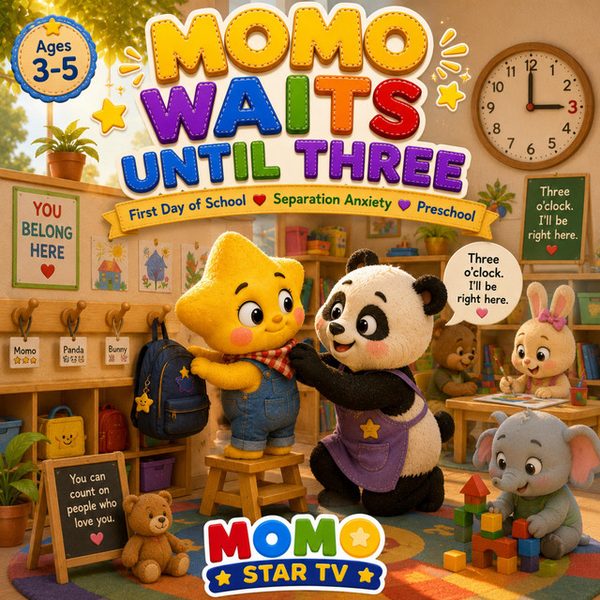
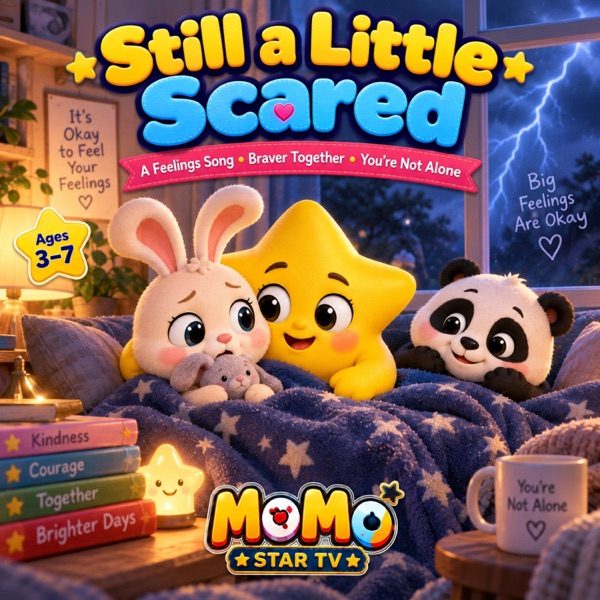
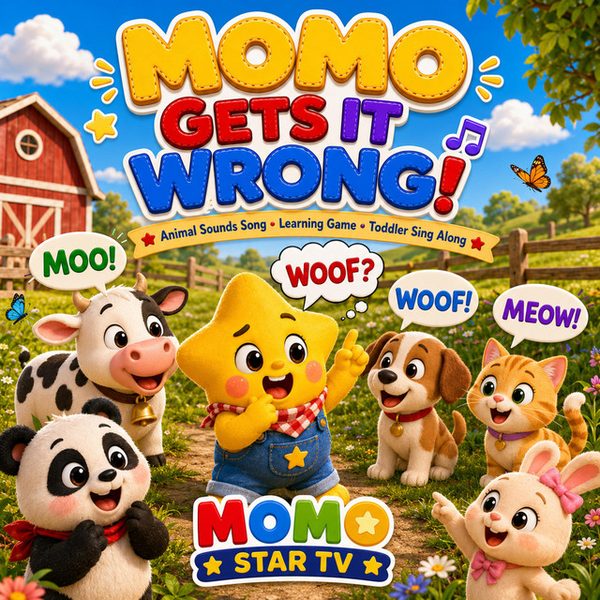
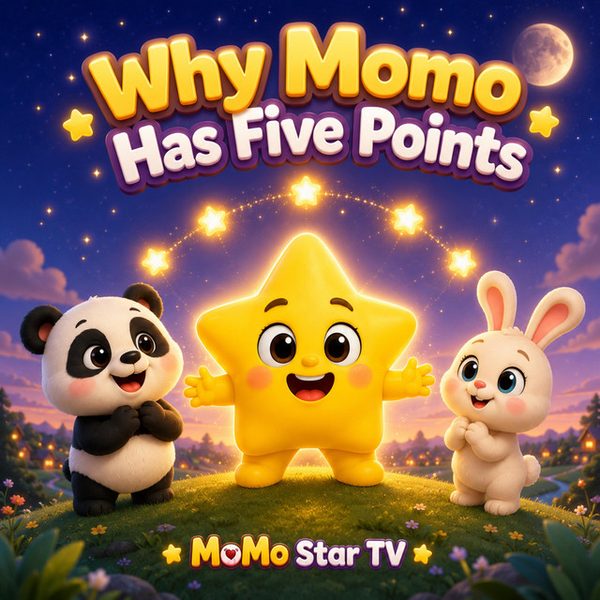
We use AI in production and say so; people decide what every song is for, which characters are in it and whether it’s released; and this site states no facts about a song that aren’t on its cover, in its release data or in our own song records. If you’d like to try the check on us, these song sets are a good start:
Questions parents ask
Are AI kids songs bad for children?
Not because of the tool. The concerns experts have raised are about mass-produced videos with errors, confusing stories and unsafe scenes. A carefully made song is judged the same way as any other — the seven-point check above works for both.
Are AI nursery rhymes safe?
Treat them like any nursery-rhyme video: check the words, check that the characters and story stay consistent, and watch to the end once. Momo’s nursery rhymes with a twist are AI-assisted and say so.
How do I know if a song on Spotify is AI?
Look in the song’s credits for an AI credit, then check the artist’s profile and website. A missing credit doesn’t prove a song is human-made.
What should my toddler listen to instead of AI slop?
Anything that passes the seven-point check. For gentler options from many makers — not only us — see our guide to CoComelon and Ms Rachel alternatives.